Qualixar OS: The First Universal OS for Orchestrating Heterogeneous AI Agents
Qualixar OS emerges as the first application-layer operating system designed for universal AI agent orchestration, supporting 10 LLM providers and 8+ frameworks. It introduces execution semantics for 12 distinct multi-agent topologies and a novel LLM-driven design engine called Forge.
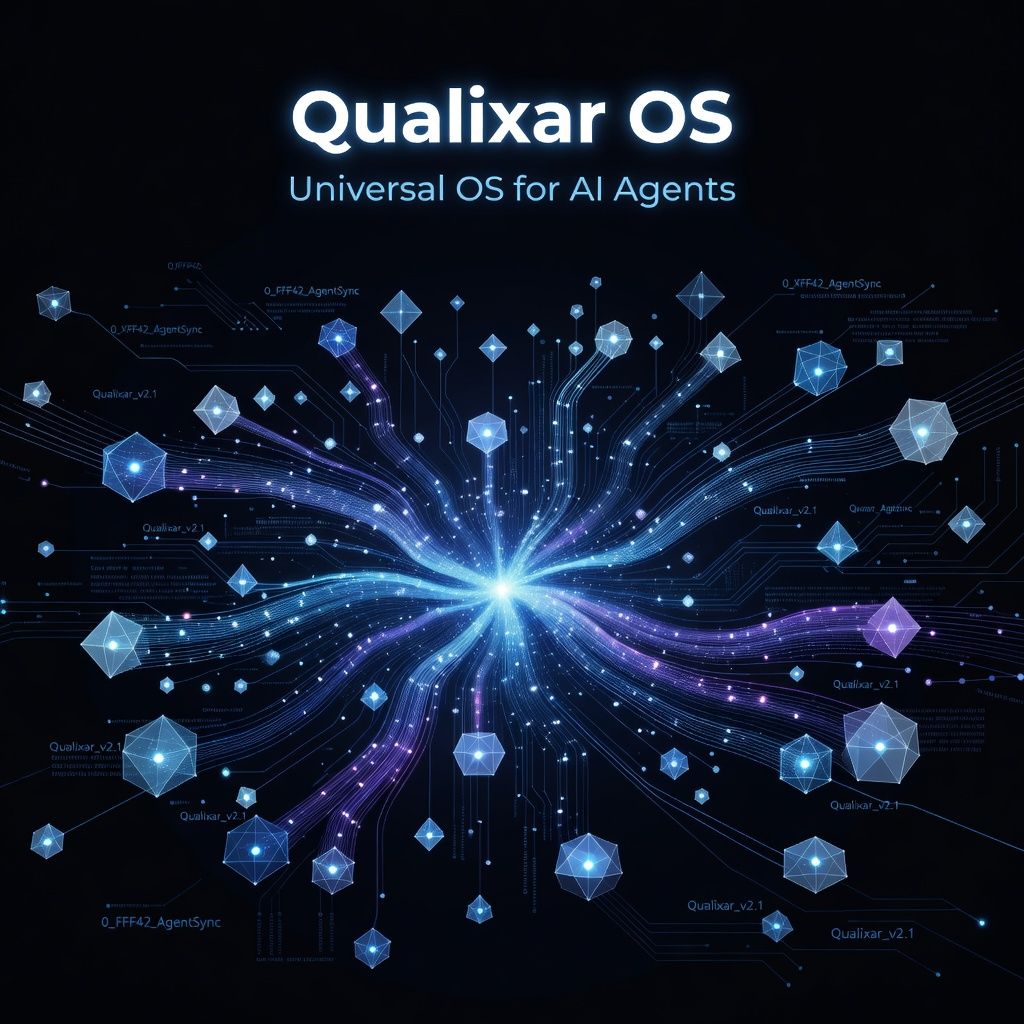
Researchers have unveiled Qualixar OS, a groundbreaking application-layer operating system specifically engineered for the orchestration of heterogeneous AI agent systems. Unlike previous kernel-level initiatives or single-framework tools like AutoGen and CrewAI, Qualixar OS functions as a complete runtime capable of spanning 10 different Large Language Model providers, over eight agent frameworks, and seven distinct communication transports. This architecture aims to solve the fragmentation currently plaguing the multi-agent landscape by providing a unified environment where diverse agents can interact seamlessly.
The significance of this release lies in its granular control over complex agent interactions. Qualixar OS contributes formal execution semantics for 12 unique multi-agent topologies, including grid, forest, mesh, and maker patterns, allowing developers to precisely define how agents collaborate and compete. Central to this system is Forge, an LLM-driven team design engine that leverages historical strategy memory to optimize team composition and workflow. This moves the field beyond static agent configurations to dynamic, self-optimizing systems that can adapt their structure based on past performance and current task requirements.
Looking ahead, the introduction of Qualixar OS sets a new benchmark for how we build and manage multi-agent ecosystems. The three-layer model architecture suggests a scalable approach that could become the standard for enterprise-grade agent deployment. While the paper details the theoretical framework and initial contributions, the industry will now watch to see how quickly this runtime is adopted by major AI labs and whether it can truly unify the disparate tools currently in use. The open question remains whether this application-layer approach can scale as effectively as kernel-level solutions when handling millions of concurrent agent interactions.