AI Transformer Solves Complex Factory Scheduling Problems
Researchers developed a Transformer-based AI model that solves the open shop scheduling problem (OSSP) faster and more efficiently, reducing the need for extensive tuning. Tested on Taillard benchmark instances (4x4, 5x5, 7x7, and 10x10), the approach could help businesses optimize production lines and reduce costs.
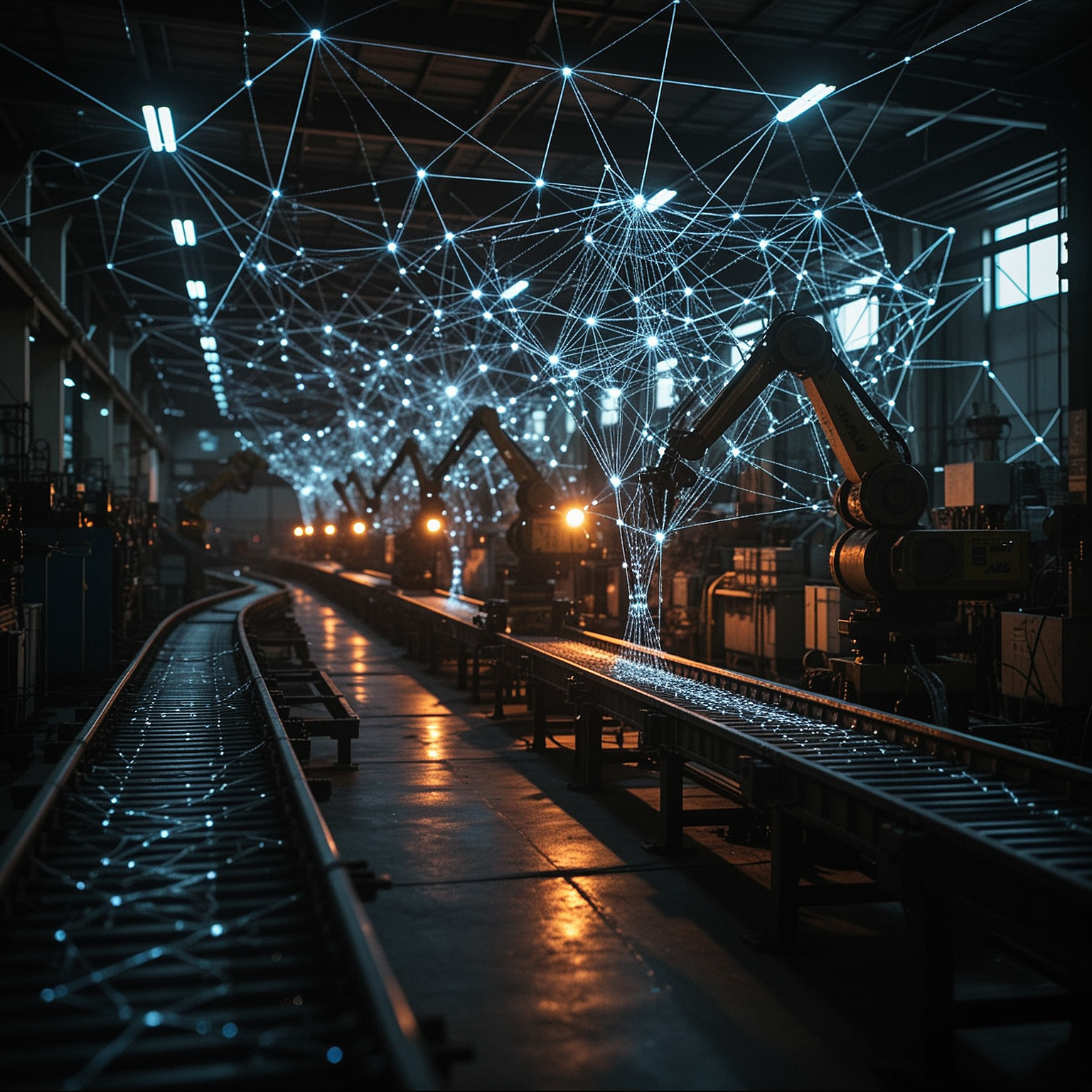
Researchers from ArXiv cs.AI released a new AI model that uses a Transformer architecture to solve the open shop scheduling problem (OSSP). This problem involves assigning jobs to machines in a factory to minimize completion time, a task that becomes increasingly complex as the number of jobs and machines grows. The model uses an encoder-decoder architecture with multi-head attention, trained on Taillard benchmark instances (including sizes 4x4, 5x5, 7x7, and 10x10), allowing it to learn scheduling policies adaptively.
This breakthrough matters because traditional methods either rely on exact algorithms that become too slow for large-scale problems, or on classical dispatching rules and metaheuristics that need significant manual tuning to maintain quality. With this AI model, businesses can potentially reduce downtime and costs, leading to more efficient operations.
If you're interested in learning more, you can explore the full research paper on ArXiv. While the technical details are complex, understanding the basics of how AI can optimize scheduling offers a glimpse into the future of industrial efficiency. Check out the paper at the link below for more details.